
Saturday, 17 October 2026
Indonesia is working to develop cleaner energy sources to meet its growing electricity needs. One important option is hydropower, which uses moving water to generate electricity. To support this effort, Indonesia’s state-owned electricity company, PLN, has signed a cooperation agreement with Brazilian investment company J&F S.A. to study the development of hydropower plants in Indonesia.
This partnership shows how international cooperation can help Indonesia explore its natural resources and move toward a more sustainable energy system.
Indonesia and Brazil Work Together
PLN signed a memorandum of understanding (MoU) with J&F S.A., a Brazilian company with investments across several business sectors. The agreement focuses on studying opportunities to develop hydropower plants in Indonesia.
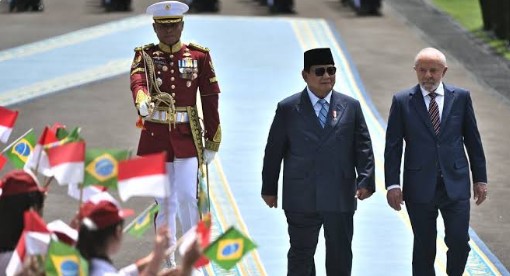
The signing was witnessed by Indonesian President Prabowo Subianto and Brazilian President Luiz Inácio Lula da Silva during their meeting in Jakarta.
The cooperation is part of broader efforts to strengthen relations between Indonesia and Brazil, particularly in the energy sector.
For Indonesia, working with an international company can provide opportunities to exchange knowledge, explore new technology, and learn from different approaches to energy development.
However, the agreement is an initial step. The partners need to study potential projects before any specific power plant can be confirmed for construction.
How Do Hydropower Plants Work?
Hydropower plants generate electricity by using the movement of water. In many facilities, water flows through a system of channels or pipes and turns a turbine. The turbine drives a generator, which produces electricity.
Some hydropower plants use dams and reservoirs to control water flow. Others use the natural flow of rivers, depending on the location and project design.
One major advantage of hydropower is that it can generate electricity without directly burning fossil fuels during operation. Some facilities can also adjust their electricity output according to water availability and operating requirements.
Indonesia has many rivers and water resources that could support hydropower development. However, each project needs careful planning because water availability, land conditions, environmental impacts, and local communities can affect its feasibility.
Supporting Indonesia’s Clean Energy Goals
According to the electricity supply business plan, known as RUPTL, for the 2025–2034 period, Indonesia aims to add 11.7 gigawatts of hydropower capacity over the ten-year period.
This target shows the important role hydropower could play in Indonesia’s future electricity system.
Developing more renewable energy can help diversify the country’s electricity sources and reduce dependence on fossil fuels. It can also support efforts to lower greenhouse gas emissions.
The partnership between PLN and J&F S.A. could help identify projects that contribute to these goals. Sharing technical knowledge and investment experience may also help the partners assess opportunities more effectively.
Still, hydropower projects require detailed studies. Developers must consider construction costs, water supply, biodiversity, land use, and the needs of people living near proposed project locations.
Potential Benefits for Local Communities
If suitable projects move forward, hydropower development could create opportunities for local workers and supporting businesses. Construction activities may increase demand for transportation, building materials, engineering services, and other local services.
Reliable electricity can also support businesses, public facilities, and economic activities in surrounding areas.
At the same time, these benefits depend on how each project is planned and implemented. Environmental protection, responsible water management, and consultation with local communities are important parts of sustainable development.
A Step Toward Cleaner Electricity
The cooperation between PLN and Brazil’s J&F S.A. is an opportunity for Indonesia to explore more hydropower projects and strengthen its renewable energy sector.
Although the agreement does not mean that construction has already begun, it creates a starting point for further studies and cooperation.
With careful planning, suitable technology, and responsible environmental management, future hydropower projects could help Indonesia meet its electricity needs while supporting a cleaner energy future.
 EN
 ID
 CN
 AR
 IT
 ES
 JP
 KR