
Wednesday, 20 May 2026
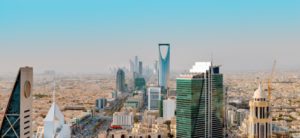
The Middle East has long been one of the world’s most important economic regions, especially because of oil, trade routes, and global finance. But when geopolitical tension rises in that part of the world, the effects do not stay there. They spread into global markets, business confidence, and investment decisions. That is why recent warnings about business environment risk in the Middle East have become a serious topic for investors.
When geopolitical shocks happen, several things usually follow. Energy prices can become unstable, shipping routes may face disruption, investor confidence can weaken, and businesses in affected regions often face higher operational risk. For companies and investors, uncertainty is expensive. It makes planning harder and increases caution.
This kind of situation often leads investors to think differently. Instead of focusing only on high-return markets, they begin looking for destinations that offer stability, diversification, and long-term growth.
That is where places like Lombok start entering the conversation. Lombok may not replace major financial hubs, but it offers something investors often seek during uncertain times: a growing tourism economy, lower entry costs compared to mature markets, government-backed infrastructure, and a location far from geopolitical conflict zones.
Lombok’s investment appeal is also connected to diversification. Some investors are no longer putting all their money in one region or one type of asset. Instead, they look for emerging destinations where tourism, property, hospitality, and lifestyle businesses can grow over time. Lombok fits that profile because it is still developing, but it is already receiving serious infrastructure and tourism attention.
Another advantage is cost. Compared to highly mature tourism destinations, Lombok still offers lower land prices and earlier-stage investment opportunities. For investors seeking long-term positioning rather than short-term speculation, this can be attractive.
Of course, Lombok is not a magic solution. Every investment has risk. Tourism markets can fluctuate, regulations matter, and due diligence remains essential.
But in times when global geopolitical shocks create uncertainty, investors often search for alternative destinations with growth potential and relative stability.
That is why Lombok is increasingly being seen not just as a tourism island, but as a strategic diversification option. In uncertain times, smart investors do not only chase growth, they also look for safer places to build it.
 IT
IT  EN
EN  ID
ID  CN
CN  AR
AR  ES
ES  JP
JP  KR
KR