
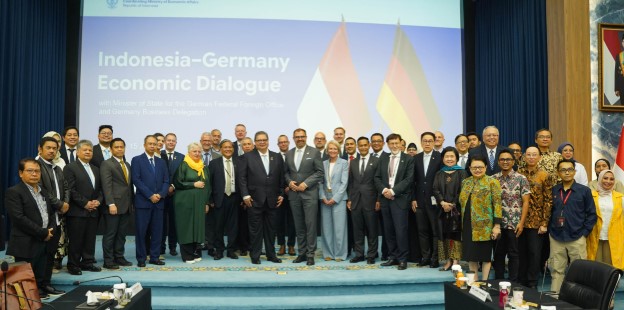
Indonesian Chamber of Commerce and Industry Reveals Germany’s Enthusiasm to Boost Jakarta’s Economy


Monday, 10 August 2026


Germany is showing strong interest in expanding its economic relationship with Indonesia. According to Anindya Novyan Bakrie, Chairman of the Indonesian Chamber of Commerce and Industry (Kadin Indonesia), German businesses are increasingly interested in trade, investment, industrial cooperation, and even worker exchange programs.


The positive signal came after the Indonesia-Germany Economic Dialogue and Germany Business Dialogue held in Jakarta on June 15, 2026. The meeting was part of German President Frank-Walter Steinmeier’s state visit to Indonesia.  So, what exactly is Germany interested in?


Trade Is Still a Major Opportunity


One of the biggest topics is trade. German businesses are looking closely at opportunities that could emerge through the Indonesia-European Union Comprehensive Economic Partnership Agreement, or IEU-CEPA.


The agreement is expected to create more opportunities for businesses from both sides by improving access to markets and strengthening economic cooperation. Kadin Indonesia says German companies are enthusiastic about taking advantage of these opportunities.


For Indonesia, this could mean more opportunities to expand exports and attract European companies. For German businesses, Indonesia offers access to one of Southeast Asia’s largest economies and a growing consumer market.


Germany Is Also Interested in Industrial Development


The discussion was not only about buying and selling products. Germany is also interested in Indonesia’s industrial development.


Several important sectors were discussed, including critical minerals, energy transition, and advanced manufacturing technology. These areas are becoming increasingly important as countries around the world look for cleaner energy and more efficient industrial systems.


Germany’s interest in these sectors could create opportunities for Indonesian companies to work with German businesses and gain access to new technology, knowledge, and expertise.


More Investment Could Be Coming


Another interesting point is Germany’s desire to increase foreign direct investment in Indonesia.


According to Anindya Bakrie, German businesses are looking for more investment opportunities. Coordinating Minister for Economic Affairs Airlangga Hartarto also said German business representatives were asking about potential sectors for cooperation, including strategic minerals such as nickel and rare earth elements.


For Indonesia, more German investment could bring not only capital but also technology, industrial expertise, and new business opportunities.


Worker Exchange Could Create New Opportunities


There is also an interesting human element to the relationship. Indonesia and Germany are exploring worker exchange and training opportunities. The idea is not simply to send Indonesian workers abroad, but also to create opportunities for people from both countries to learn from each other and improve their skills.


Germany is facing a declining number of younger workers, while Indonesia has a large workforce. This creates an opportunity for cooperation in employment and vocational training.


Further discussions about worker placement and training were planned through the Joint Commission on Industry and Economy.


A Bigger Economic Relationship


Overall, Germany’s growing interest shows that the relationship between Indonesia and Germany is becoming broader. It is no longer just about traditional trade.


From investment and critical minerals to energy transition, manufacturing, and human resources, there are plenty of areas where both countries can work together.


For Jakarta, which remains an important center for Indonesia’s business and economic activities, stronger German cooperation could bring new investment, technology, and international business connections. The next step will be turning this enthusiasm into concrete projects. If that happens, Indonesia-Germany economic cooperation could become an increasingly important part of Jakarta’s future economic growth.