
Wednesday, 04 November 2026
Developing better transportation and regional connectivity is an important step toward supporting economic growth. In East Java, the provincial government has worked with Germany to improve connectivity across the Gerbangkertosusila Plus region.
This cooperation focuses on creating a more sustainable urban transportation system. The initiative is expected to make the movement of people and goods more efficient while supporting economic activities across several cities and regencies.
What Is Gerbangkertosusila Plus?
Gerbangkertosusila Plus is a regional development area in East Java that connects several cities and regencies. Its name comes from Gresik, Bangkalan, Mojokerto, Surabaya, Sidoarjo, and Lamongan. The Plus area also includes Jombang, Bojonegoro, and Tuban.
These areas have important roles in East Java’s economy. Surabaya, for example, is a major business and trade center, while surrounding regions contribute through manufacturing, agriculture, logistics, and other industries.
Because these areas are connected through economic and transportation activities, better regional mobility is important.
Cooperation Between East Java and Germany
The East Java Provincial Government partnered with Germany through Kreditanstalt für Wiederaufbau (KfW), a German development bank.
One of the main programs introduced through this cooperation is the Sustainable Urban Mobility Plan (SUMP). The program focuses on developing a more sustainable and integrated transportation system for the Gerbangkertosusila Plus region.
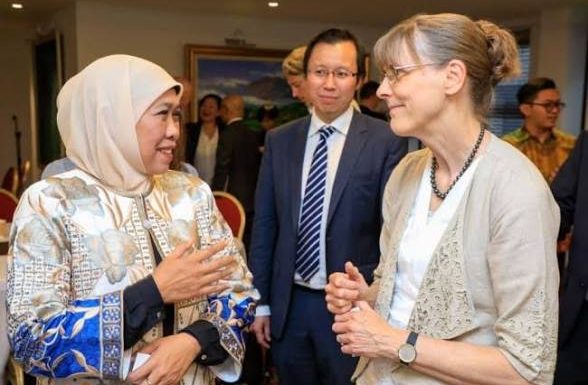
The cooperation was officially launched through a kickoff meeting in Surabaya, attended by representatives of the East Java government and related stakeholders.
The initiative also requires coordination between local governments across the participating cities and regencies. This is important because transportation problems do not stop at administrative boundaries.
For example, people may live in one regency but travel to Surabaya every day for work. Businesses also depend on smooth transportation connections to distribute products between different areas.
Why Is Better Connectivity Important?
Improved connectivity can bring several benefits to East Java.
First, a more integrated transportation system can make daily travel easier. People may have better access to workplaces, schools, markets, and other public facilities.
Second, better mobility can support businesses and logistics activities. When transportation becomes more efficient, companies can move goods and services between regions more easily.
This is particularly important for industrial areas, commercial centers, and logistics facilities that depend on reliable transportation networks.
Third, better connectivity can make the region more attractive to investors. Companies usually consider transportation access when deciding where to establish factories, warehouses, offices, or other business facilities.
Supporting Sustainable Urban Development
The Sustainable Urban Mobility Plan is also important because modern cities need transportation systems that consider environmental and social factors.
Instead of focusing only on road construction, sustainable mobility planning looks at how different transportation options can work together.
This can include improving public transportation, making urban mobility more efficient, and encouraging better connections between residential, commercial, and industrial areas.
However, achieving these goals requires long-term planning and cooperation between different levels of government.
A Step Toward Stronger Regional Development
The partnership between East Java and Germany represents an important effort to improve regional connectivity.
With proper planning and coordination, the Gerbangkertosusila Plus area has the potential to develop into a more integrated economic region.
Better transportation connections can make everyday activities easier, support business growth, and create more opportunities for investment across East Java.
 CN
 EN
 ID
 AR
 IT
 ES
 JP
 KR