
2026年8月27日,星期四
Indonesia and Germany are taking another step to strengthen their economic relationship. The two countries are not only talking about trade, but are also looking at real investment opportunities, renewable energy, semiconductors, and vocational education. Jakarta recently became an important meeting point for this growing partnership.
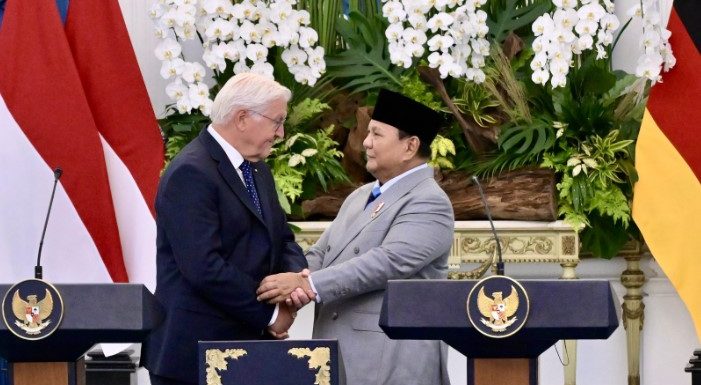
Indonesian Coordinating Minister for Economic Affairs Airlangga Hartarto met with Germany’s Federal Minister for Economic Cooperation and Development Reem Alabali Radovan and a German business delegation in Jakarta. The meeting focused on turning the long-standing relationship between Indonesia and Germany into more concrete projects and investments.
Germany is already an important business partner for Indonesia. According to the Indonesian Coordinating Ministry for Economic Affairs, more than 250 German companies are operating in Indonesia. Their cumulative investment between 2021 and 2026 reached around US$1.23 billion. This shows that German businesses already have a strong presence in the Indonesian market.
Now, both sides want to take that relationship further. One of the main areas being discussed is renewable energy. Germany is interested in supporting Indonesia’s transition toward cleaner and more sustainable energy. The two countries are also working together through the Just Energy Transition Partnership, or JETP, with projects committed under the partnership reaching US$21.4 billion.
For Jakarta, this cooperation could create interesting opportunities. As Indonesia’s main business and economic center, Jakarta can become a gateway for international companies looking to enter the Indonesian market. German companies can potentially work with local businesses, government institutions, and other partners to develop new projects.
Another interesting sector is semiconductors. Indonesia sees the semiconductor industry as an important part of its future industrial development. Germany, meanwhile, has strong experience in applied research, precision manufacturing, and industrial standards. Combining these strengths could create opportunities for technology and manufacturing investments in Indonesia.
Education is also part of the conversation. Germany is well known for its vocational education system, particularly its focus on practical skills and industry needs. Indonesia hopes to strengthen vocational education so that graduates are better prepared for the modern workforce.
This cooperation is not simply about bringing foreign money into Indonesia. It is also about bringing knowledge, technology, skills, and new business networks. For German companies, Indonesia offers access to one of Southeast Asia’s biggest markets. For Indonesia, German investment can support industrial development and create more opportunities for skilled workers.
The two countries are also discussing the Indonesia-European Union Comprehensive Economic Partnership Agreement, or IEU-CEPA. If finalized as expected, the agreement could provide an even wider framework for economic cooperation between Indonesia and Europe.
With Jakarta at the center of many of these discussions, the Indonesia-Germany partnership could become more than a diplomatic relationship. It could develop into a practical business connection that supports investment, technology, green energy, and human resources. For investors watching Indonesia, the message is pretty clear: opportunities are becoming wider, and Germany is increasingly looking at Indonesia as an important partner for the future.
 CN
CN  EN
EN  ID
ID  AR
AR  IT
IT  ES
ES  JP
JP  KR
KR