
Tuesday, 25 August 2026
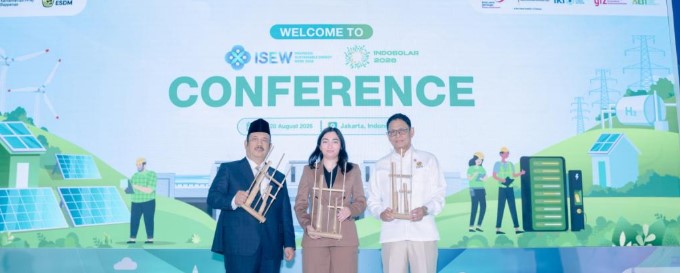
Indonesia is moving into an important stage of its energy transition, and Germany is showing that it wants to be part of the journey. This was one of the key messages from the opening of Indonesia Sustainable Energy Week (ISEW) 2026 in Jakarta.
Held on August 19–20, ISEW 2026 brought together government officials, businesses, investors, financial institutions, academics, development partners, and other stakeholders. The main idea was pretty simple: Indonesia has ambitious energy goals, but now it needs to turn those goals into real projects.
The event carried the theme “Accelerating Indonesia’s Energy Transition: Aligning Policies, Private Sector Action, and Empowering People.” Discussions focused on renewable energy, financing, infrastructure, technology, and how the private sector can become more involved.
Germany was one of the important partners at the event. Reem Alabali Radovan, Germany’s Federal Minister for Economic Cooperation and Development, attended the opening alongside Indonesian officials. Her presence showed that cooperation between the two countries is becoming increasingly important, especially in the energy and climate sectors.
For Germany, Indonesia is seen as an important partner. Indonesia has a large economy and significant renewable energy potential, which creates opportunities for cooperation as the country works to reduce its dependence on fossil fuels. Germany also sees the transition as an opportunity for German and European companies to invest in Indonesia and develop long-term business relationships.
This is where ISEW 2026 becomes interesting for investors. The event is not only about discussing climate change or renewable energy in theory. It also focuses on what companies actually need before they are ready to invest.
For example, investors need clear policies, reliable infrastructure, financing options, and projects that are realistic and commercially viable. ISEW provided a space for companies, financial institutions, technology providers, and government representatives to discuss these issues and look for potential partnerships.
Renewable energy capacity is one major area of attention. Indonesia needs investment not only in solar, wind, and other renewable sources, but also in electricity infrastructure that can support a larger share of renewable energy in the national power system. Mobilising private investment will therefore be an important part of the transition.
ISEW 2026 also included an exhibition, technology showcase, networking sessions, and business matchmaking activities. These activities gave investors and businesses opportunities to meet potential partners directly.
The cooperation between Indonesia and Germany could bring benefits beyond energy. According to Germany’s development cooperation representatives, the energy transition can create opportunities for sustainable economic growth, better jobs, local value creation, and long-term business relationships.
So, ISEW 2026 can be seen as more than just another energy conference in Jakarta. It is a meeting point where Indonesia’s energy ambitions meet international investment, technology, and cooperation.
For German companies looking for opportunities in Southeast Asia, Indonesia’s energy transition could become an increasingly interesting market. And for Indonesia, stronger cooperation with Germany could help turn renewable energy plans into projects that deliver economic and environmental benefits in the years ahead.
 KR
KR  EN
EN  ID
ID  CN
CN  AR
AR  IT
IT  ES
ES  JP
JP