
2026年7月8日(水)
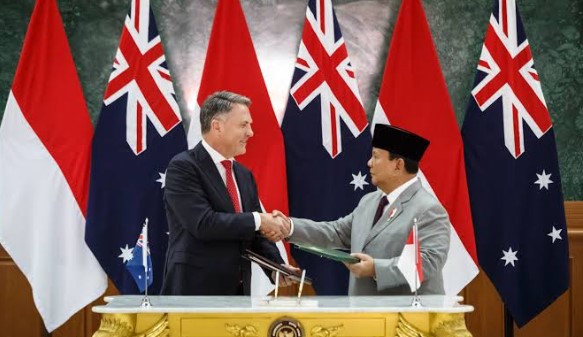
Indonesia and Australia have always been close neighbors, but now the relationship is moving beyond trade. Both countries are looking at bigger opportunities, especially in investment, downstream industries, and long-term economic partnerships.
Recently, the Indonesian government has stepped up its efforts to attract more Australian investors, focusing on the country’s massive downstream processing or hilirisasi program. Rather than exporting raw natural resources, Indonesia wants to process them into higher-value products before they reach global markets. This strategy creates more jobs, strengthens local industries, and increases the country’s competitiveness.
During a visit to Australia, Deputy Minister of Investment and Downstream Industry Todotua Pasaribu met with government officials, business leaders, and around 40 Australian companies at the Australia-Indonesia Business Forum. The message was simple: Indonesia is open for business, and now is the perfect time to invest.
One of the biggest attractions is Indonesia’s downstream investment potential, estimated at around USD 618 billion. The opportunities cover industries such as nickel, copper, bauxite, tin, palm oil, coconut, seaweed, salt, and soda ash processing. Instead of selling raw materials overseas, Indonesia wants investors to help build processing facilities inside the country, creating more value before export.
For Australian companies, this opens exciting possibilities. Australia is known for its expertise in mining, engineering, clean technology, renewable energy, and sustainable business practices. Combining these strengths with Indonesia’s abundant natural resources could benefit both countries.
The cooperation isn’t limited to mining. Indonesia is also encouraging investment in infrastructure, manufacturing, renewable energy, food security, and industrial estates. Many of these opportunities are part of the country’s National Strategic Projects (PSN), which aim to accelerate economic growth and improve connectivity across the archipelago.
Another reason Australian investors are showing interest is the strong economic framework already in place. The Indonesia-Australia Comprehensive Economic Partnership Agreement (IA-CEPA) has made trade and investment between the two countries easier by reducing barriers and encouraging business collaboration. As the agreement continues to mature, companies on both sides have more confidence to explore long-term partnerships.
Indonesia has also introduced various reforms to improve its investment climate. Licensing procedures have become more streamlined, while fiscal and non-fiscal incentives are available for selected sectors. Special Economic Zones and industrial parks continue to expand, giving investors more choices when deciding where to establish operations.
Looking ahead, the partnership between Indonesia and Australia has the potential to become much stronger. Downstream industries are expected to play a major role in Indonesia’s economic transformation over the next decade, while Australian businesses can contribute technology, capital, and expertise to support sustainable development.
For both countries, this is more than just an investment opportunity. It is a chance to build resilient supply chains, create quality jobs, encourage innovation, and strengthen regional economic cooperation.
As global demand for processed minerals, renewable energy materials, and sustainable products continues to grow, Indonesia and Australia are well positioned to become trusted partners. If both nations continue working together, the future of downstream investment could bring lasting benefits—not only for businesses, but also for communities across the region.
 JP
JP  EN
EN  ID
ID  CN
CN  AR
AR  IT
IT  ES
ES  KR
KR