
Tuesday, 06 October 2026
Indonesia is looking beyond Venezuela as it searches for new opportunities in the Latin American oil and gas sector. Through state-owned energy company PT Pertamina, the country is exploring possible investments in several South American countries as part of a broader strategy to make its oil supply more secure and diversified.
The plan comes at a time when global energy markets are facing uncertainty. Geopolitical tensions, especially around the Middle East and the Strait of Hormuz, have raised concerns about the safety and reliability of traditional oil supply routes. For Indonesia, finding alternative sources has therefore become an important part of its energy strategy.
Deputy Foreign Minister Arif Havas Oegroseno said Indonesia is currently looking at several countries in South America with strong oil and gas potential. He explained that almost all countries in Latin America have some level of potential in the energy sector.
Pertamina is already discussing possible cooperation with partners in several South American countries. However, these discussions are still at an early exploratory stage, meaning Indonesia has not yet finalized any major investment deals outside Venezuela.
This is an interesting move because Indonesia is not simply looking to buy oil from other countries. The government is also considering investing directly in oil and gas assets. By having ownership or a stake in overseas energy projects, Indonesia could have greater control over part of its future oil supply.
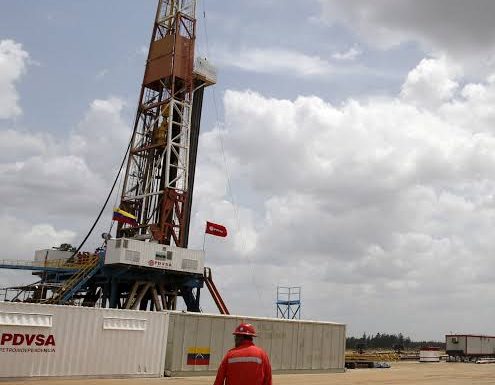
Pertamina has experience with this approach. Through Pertamina International Exploration and Production (PIEP), the company already has interests in Venezuela. PIEP controls a 71.09 percent stake in French oil and gas company Maurel & Prom, which has oil assets in Venezuela.
Venezuela, however, is not the only option. In fact, Pertamina has already shown interest in other Latin American markets, including Guyana, Suriname, and Brazil. These countries have attracted attention because of their significant oil and gas potential.
More recently, Pertamina has also begun exploratory discussions about upstream oil and gas investments in Guyana and Suriname. Indonesia sees these opportunities as a way to reduce dependence on a limited number of supply sources and make imports more resilient against geopolitical disruptions.
The strategy is not limited to Latin America. Indonesia is also looking at alternative oil sources in Africa, including Algeria, Nigeria, and Angola. The main idea is simple: if one supply route becomes difficult or disrupted, Indonesia should have other options available.
For Pertamina, overseas investment could also provide long-term benefits. Instead of relying entirely on purchasing crude oil from international markets, owning stakes in oil fields can give the company access to production from those assets.
At the same time, investing in Latin America will not be without challenges. The region is far from Indonesia, meaning transportation costs can be significant. There are also political, regulatory, commercial, and operational risks that need to be carefully considered.
Still, Indonesia appears interested in keeping its options open. With South America becoming increasingly important in the global oil market, investments outside Venezuela could give Pertamina another way to strengthen its international energy portfolio.
For Indonesia, the goal is ultimately bigger than simply finding another oil field. It is about building a more diversified energy supply network that can remain reliable even when global politics become unpredictable.
 ES
ES  EN
EN  ID
ID  CN
CN  AR
AR  IT
IT  JP
JP  KR
KR