
Tuesday, 15 September 2026
Germany is looking to strengthen its economic relationship with Indonesia as global conditions continue to change. The opportunity is becoming increasingly important as countries reassess their partnerships and look for stronger cooperation with reliable economic partners.
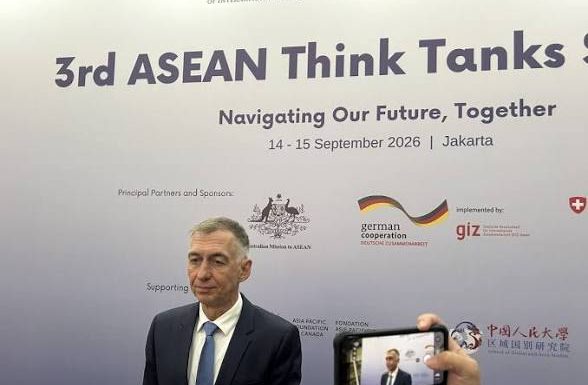
According to Germany’s Ambassador to Indonesia, ASEAN and Timor-Leste, Ralf Beste, Germany sees significant room to expand cooperation with Indonesia, especially in the economic sector. He made the statement in Jakarta on September 14, 2026, highlighting Indonesia’s important position in Southeast Asia.
For Germany, Indonesia is an interesting partner for several reasons. Indonesia is the largest country in Southeast Asia by population and economy and is also home to the ASEAN headquarters. This gives Indonesia an important regional role and makes it a country that Germany is paying close attention to.
The potential for closer economic cooperation is also connected to the wider relationship between Europe and Southeast Asia. ASEAN is already an important trading partner for the European Union, and European countries are working to strengthen their individual trade relationships with ASEAN members.
One major development to watch is the Indonesia-European Union Comprehensive Economic Partnership Agreement, or IEU-CEPA. Indonesia is targeting the signing of the agreement in October 2026, with the deal expected to go through further approval before potentially taking effect in early 2027.
For businesses, agreements like this could create opportunities by improving market access between Indonesia and European countries. It could also encourage companies to look more seriously at trade, investment, manufacturing, and other forms of economic cooperation.
Germany’s interest in Indonesia also shows how important Southeast Asia has become in the changing global economy. As geopolitical conditions become more complicated, countries are looking beyond traditional partnerships and trying to build stronger relationships with strategically important markets.
For Indonesia, stronger cooperation with Germany could bring opportunities to attract more European business interest. Germany is well known for its industrial capabilities, technology, engineering, and manufacturing sectors. Closer economic ties could therefore open possibilities for cooperation in different industries.
At the same time, Indonesia offers Germany access to one of Southeast Asia’s largest markets. Its large population, growing economy, strategic location, and position within ASEAN make the country an attractive partner for long-term economic cooperation.
Still, expanding economic ties will require more than diplomatic statements. Businesses from both sides will need clear regulations, easier market access, strong investment conditions, and practical cooperation.
For now, Germany’s message is clear: Indonesia has significant potential as an economic partner, and there is plenty of room to make the relationship stronger. With global economic and geopolitical shifts continuing, the coming years could be an important period for Germany and Indonesia to build deeper trade and investment connections.
 JP
JP  EN
EN  ID
ID  CN
CN  AR
AR  IT
IT  ES
ES  KR
KR