
Saturday, 10 October 2026
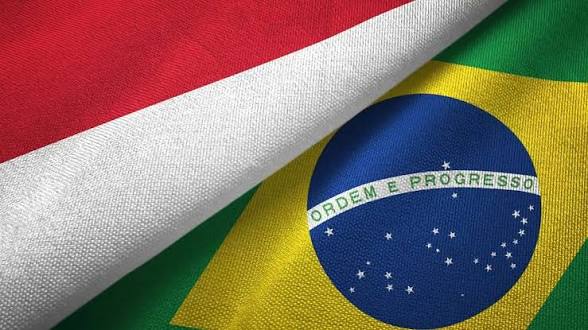
Indonesia continues to attract international investors, and Brazil is becoming part of the country’s growing agricultural investment story. One notable deal involves a planned investment worth IDR 4.5 trillion in Indonesia’s dairy farming sector. The cooperation aims to increase domestic milk production and support Indonesia’s efforts to become more self-sufficient in meeting its food needs.
A Major Investment in Dairy Farming
The investment plan was discussed through cooperation between Indonesian company PT Asiabeef Biofarma Indonesia and Brazil’s Agropecuaria 31, also known as the 31 Group. The agreement covers the development of 100,000 tropical dairy cattle in Indonesia, with an estimated investment value of IDR 4.5 trillion.
The initiative was facilitated through discussions between Indonesia’s Agriculture Minister, Andi Amran Sulaiman, and Brazil’s Agriculture Minister, Carlos Favaro.
This cooperation reflects the potential for partnerships between two countries with strong agricultural interests. Brazil has considerable experience in livestock farming, while Indonesia has a large domestic market for dairy products.
Why Does Indonesia Need This Investment?
Milk is an important source of protein and other nutrients, but meeting domestic demand remains a challenge for Indonesia. The country has relied on imported dairy products to cover part of its needs.
By developing local dairy farming, Indonesia hopes to increase its milk supply and reduce its dependence on imports. A larger domestic dairy industry could also create opportunities for farmers, livestock businesses, animal feed suppliers, and milk processing companies.
The planned development of 100,000 tropical dairy cattle is particularly interesting because cattle suited to tropical conditions can be important for farming in Indonesia’s climate. However, successful production will still depend on good animal care, suitable feed, veterinary services, and effective farm management.
More Than Just Bringing in Cattle
An investment of this size is not simply about introducing more animals to farms. Building a reliable dairy industry requires a complete system, from breeding and feeding to milk collection, transportation, processing, and distribution.
If the project develops successfully, it could encourage improvements across Indonesia’s dairy supply chain. Local businesses may find opportunities to provide supporting services, while farmers could benefit from better access to technology and industry knowledge.
Technology and expertise from Brazil may also offer useful lessons for Indonesia. Brazil has an established agricultural sector, making cooperation between businesses in both countries potentially valuable for developing more productive farming operations.
Of course, turning an investment agreement into long-term results takes time. The project will need proper planning, sufficient infrastructure, and consistent quality control to deliver its intended benefits.
Strengthening Indonesia-Brazil Economic Relations
The planned dairy investment also shows how international partnerships can support domestic development. Rather than focusing only on trade in finished products, cooperation can involve developing production capacity directly within Indonesia.
For Brazil, the partnership provides an opportunity to expand its business connections in Southeast Asia. For Indonesia, it offers a chance to strengthen its agricultural industry and improve the availability of locally produced milk.
Ultimately, the IDR 4.5 trillion investment plan represents a significant opportunity for Indonesia’s dairy sector. If implemented effectively, it could support local production, create business opportunities, and contribute to the country’s long-term food security goals.
 ID
ID  EN
EN  CN
CN  AR
AR  IT
IT  ES
ES  JP
JP  KR
KR